
Common Lawn Problems and How to Fix Them
The first time I tried to impress a neighbor, I watered my lawn until it looked like a small swamp, and woke up to a patchwork of brown circles the next week. Sound familiar? Whether you’re in Nairobi, New York, London or Sydney, almost every homeowner with a lawn has stared at a stubborn problem and wondered, where did it all go wrong?
/wp:paragraph wp:paragraphThis guide walks through the most common lawn problems and solutions .Think of it as the troubleshooting map your lawn secretly wants.
/wp:paragraph wp:heading {“level”:3}1. Brown patches (dead or thinning grass)
/wp:heading wp:image {“id”:3117,”sizeSlug”:”large”,”linkDestination”:”none”}
Why it happens: Underwatering, fungal disease, pet urine, compacted soil or heat stress.
How to fix it:
- Diagnose: Scrape a small patch, healthy roots pull up easily; fungal mats or slimy patches suggest disease.
- Short-term: Rake dead grass, re-seed with the right grass type for your climate and top-dress with a thin layer of quality topsoil.
- Long-term: Improve watering routine (deep, infrequent watering early morning), aerate compacted soil and rotate pet areas or dilute urine spots with water immediately.
Tool & product tip: Use a core aerator once a year and a seed mix matched to your region (cool-season vs warm-season grass).
2. Weeds taking over
/wp:heading wp:image {“id”:3107,”sizeSlug”:”large”,”linkDestination”:”none”}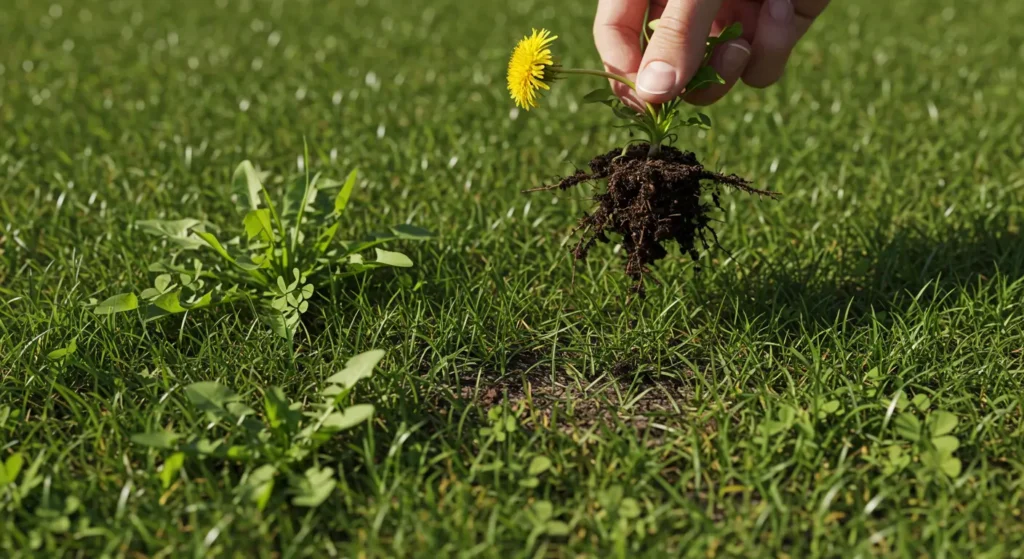
Why it happens: Bare spots, wrong mowing height, compacted soil, and poor fertility invite dandelions, crabgrass, clover and other invaders.
How to fix it:
- Prevention: Keep turf dense — mow at the recommended height for your grass species and feed with a balanced fertilizer in season.
- Spot control: Pull broadleaf weeds by hand after rain for easy removal or use targeted post-emergent herbicides on stubborn patches.
- Lawn-building: Overseed thin areas in the dormant-to-active transition period for your grass (spring for warm-season, fall for cool-season).
Pro tip: A healthy, shaded lawn can still fight weeds — address the root cause (light, soil, moisture), not just the weeds.
3. Thatch and compacted soil
/wp:heading wp:image {“id”:3109,”sizeSlug”:”large”,”linkDestination”:”none”}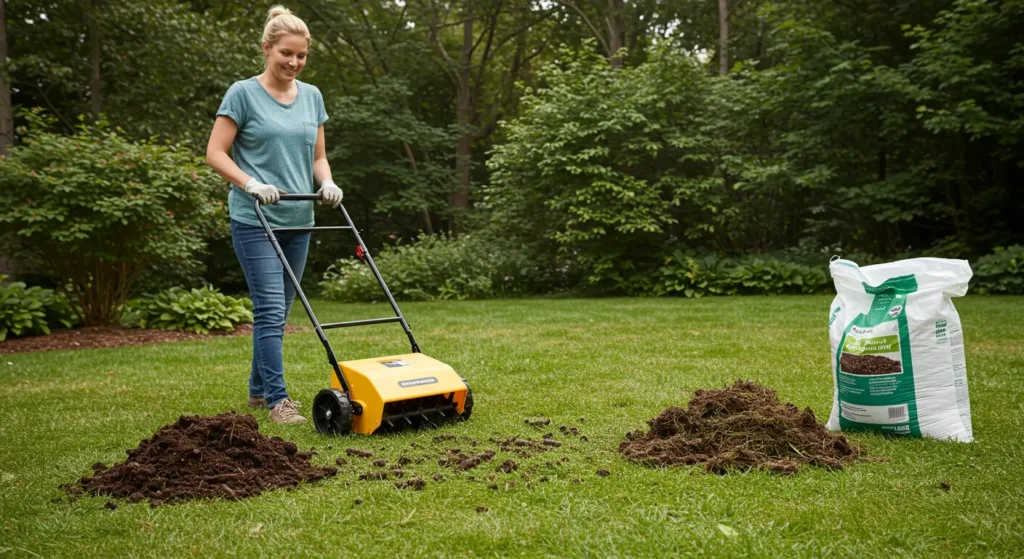
Why it happens: Over-accumulation of dead grass and roots (thatch) or heavy foot traffic leads to compacted soil that repels water and stunts roots.
How to fix it:
- Dethatch if layer >1/2 inch (use a dethatching rake or machine).
- Core aerate to relieve compaction — ideal in growing season for your grass type.
- After aeration, overseed and top-dress to encourage healthy root growth.
When to call a pro: Large lawns or heavily compacted sites may need mechanical aeration services.
4. Poor drainage / puddles
/wp:heading wp:image {“id”:3110,”sizeSlug”:”large”,”linkDestination”:”none”}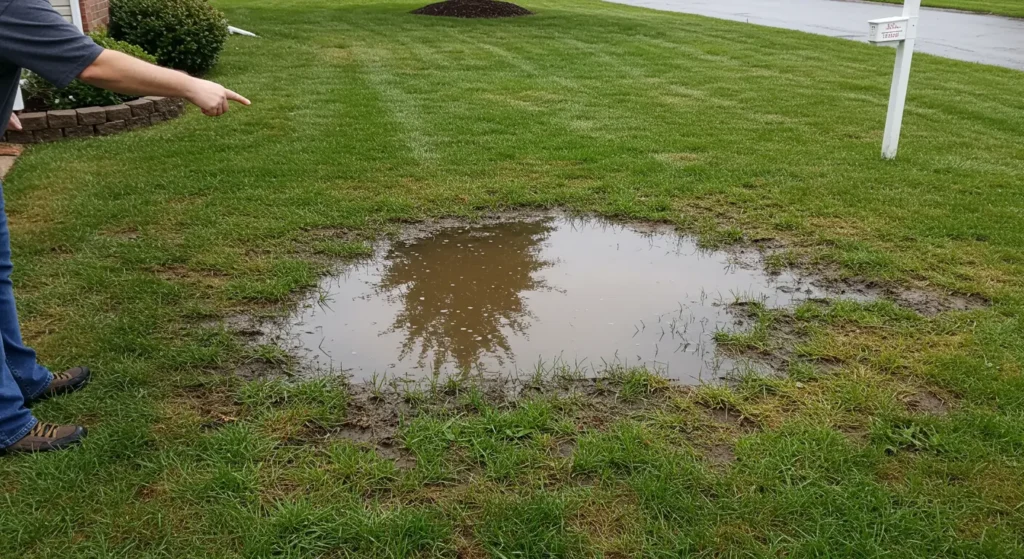
Why it happens: Clay soils, poor grading, blocked drains, or compaction.
How to fix it:
- Short fixes: Install a French drain or add organic matter to improve soil structure.
- Rethink grading for persistent problems slope away from foundations and toward drainage.
- Use sand or gypsum cautiously to improve clay soils; always test soil first.
Seasonal note: Avoid heavy activity on waterlogged lawns — wait until the soil is dry enough to avoid further compaction.
5. Pests and insects (grubs, armyworms, etc.)
/wp:heading wp:image {“id”:3111,”sizeSlug”:”large”,”linkDestination”:”none”}
Why it happens: Pests feed on grass roots or blades, often during warm months.
How to fix it:
- Inspect: Brown patches that lift like carpet often mean grubs. Small chewing on blades might be caterpillars.
- Natural controls: Encourage predators (birds), introduce nematodes for grubs, or use Bacillus thuringiensis (BT) for caterpillars.
- Chemical options: Use insecticides as a last resort and follow label instructions precisely.
Sustainability tip: Integrated pest management (IPM) — monitor, set thresholds, use biological controls first.
6. Fungal diseases (mildew, rust, brown patch)
/wp:heading wp:image {“id”:3112,”sizeSlug”:”large”,”linkDestination”:”none”}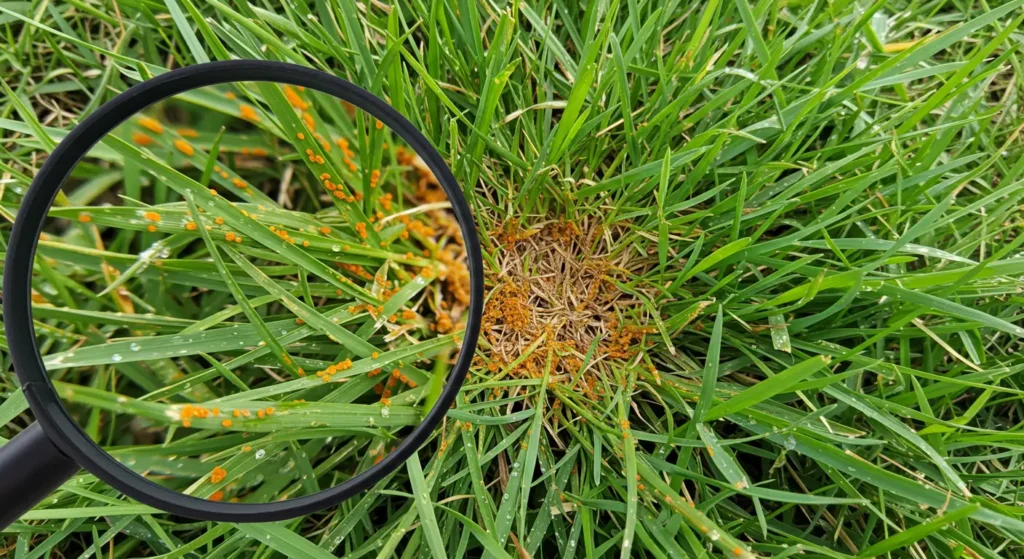
Why it happens: Overwatering, poor air circulation, mowing low, and prolonged leaf wetness.
How to fix it:
- Cultural controls: Water in the morning, improve air flow (trim nearby shrubs), raise mowing height.
- Fungicides: Use targeted fungicides for severe outbreaks; timing matters — treat early.
- Resist panic: Many fungal issues are seasonal and manageable with cultural changes.
Prevention: Proper fertilization schedule to avoid weak, disease-prone turf.
7. Uneven color / patchy growth
/wp:heading wp:image {“id”:3113,”sizeSlug”:”large”,”linkDestination”:”none”}
Why it happens: Nutrient deficiency, uneven watering, or soil variability.
How to fix it:
- Soil test to check pH and nutrient levels.
- Apply a tailored fertilizer program and adjust lime or sulfur to correct pH.
- Use spot-watering or irrigation upgrades (drip or smart controllers) to even out moisture.
8. Mower stripe/scar problems and scalping
/wp:heading wp:image {“id”:3114,”sizeSlug”:”large”,”linkDestination”:”none”}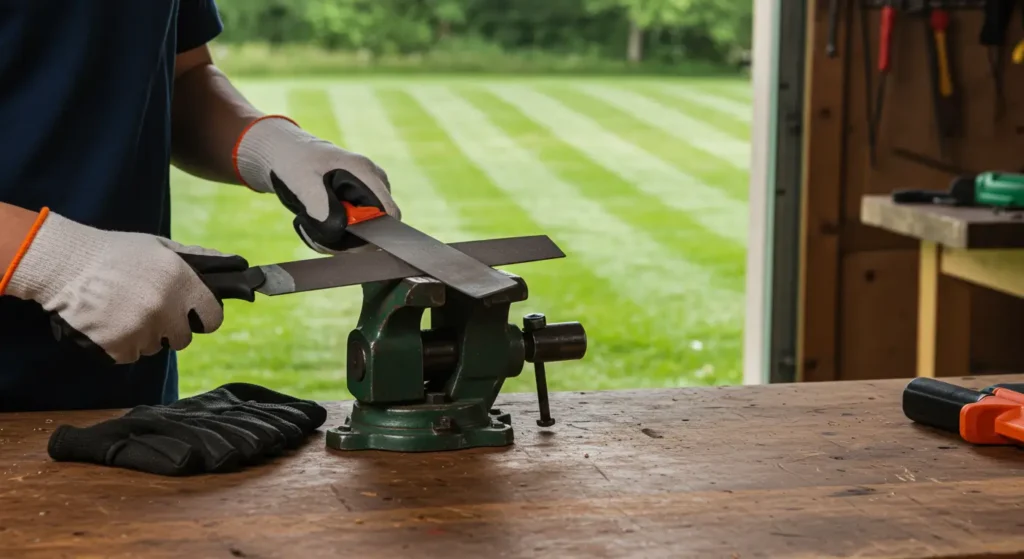
Why it happens: Dull blades, incorrect deck height, or mowing when grass is too long/short.
How to fix it:
- Keep blades sharp and mow at recommended heights.
- Don’t remove more than 1/3 of blade length in a single mow.
- Alternate mowing pattern to avoid ruts and soil compaction.
Seasonal care calendar (global, simplified)
/wp:heading wp:list- Spring (cool areas) / Early season (warm areas): Aerate, reseed, apply starter fertilizer.
- Summer: Water deeply early, monitor for heat stress and pests.
- Fall (cool areas) / Late season (warm areas): Overseed, lower mowing height gradually, apply balanced fertilizer if appropriate.
- Winter: Keep foot traffic low; clear debris to prevent disease.
Quick troubleshooting checklist
/wp:heading wp:image {“id”:3115,”sizeSlug”:”large”,”linkDestination”:”none”}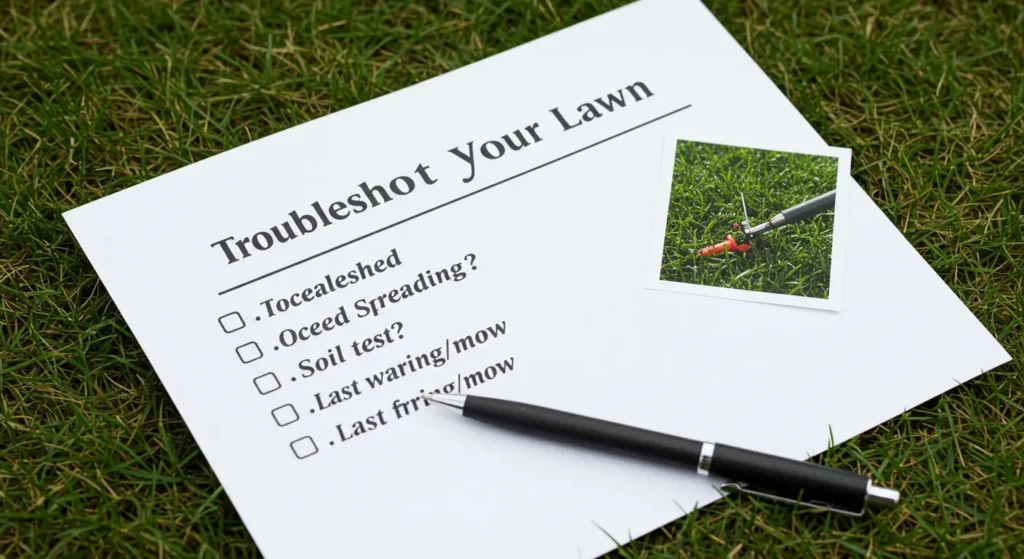
- Is the problem localized or spreading? (localized → pests/pet damage; spreading → disease, irrigation).
- When did it start relative to season, weather, or a new activity (construction, dogs)?
- Soil test results? (get one before major fertilizer or lime applications).
- Last irrigation, mowing, and fertilization dates?
When to call a professional
/wp:heading wp:list- Large infestations of grubs or disease across the lawn.
- Complicated drainage or grading work near structures.
- You want a long-term plan (lawn renovation, irrigation installation).
Your lawn may never be perfect but it can be honest. Treat symptoms quickly, fix the environment and the lawn will reward you. A small habit change (watering at 6AM, sharpening blades once a season, aerating annually) beats expensive “miracle” products every time.
/wp:paragraph wp:paragraph /wp:paragraph